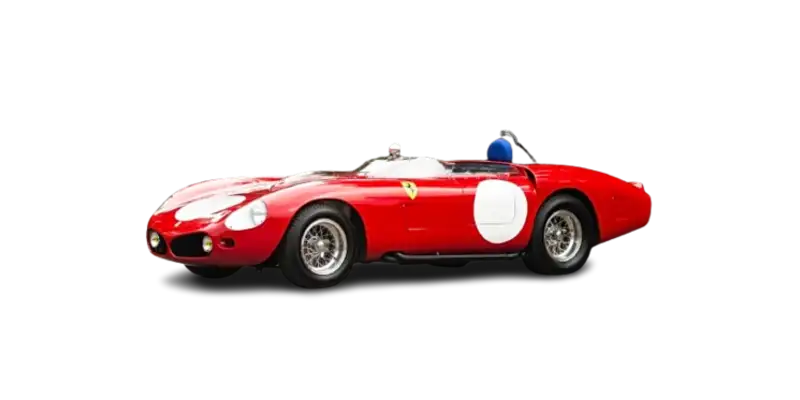


In 1961, all Ferrari 250 Testa Rossas were designated as 250 TRI61, with independent rear suspension becoming a standard feature. Addressing the high drag and visibility issues of the previous TR60 design, Ferrari engineers, including Giotto Bizzarrini and Carlo Chiti, undertook a comprehensive redesign. The new Fantuzzi-built TRI61 body featured numerous aerodynamic changes based on wind-tunnel testing. The windshield was reshaped for a more gradual slope, wrapping around the cockpit, while the rear body adopted a high, truncated Kamm tail design, resembling an "open coupe." A distinctive front air inlet, split into two, introduced the "sharknose" style, also seen in models like the 246 SP and the 156 Formula 1 car. This design, initially used on Maserati 250Fs, proved aerodynamically advantageous. During testing, a full-width deflector panel was added to the rear, inadvertently acting as a spoiler. This not only improved high-speed stability but also marked an early implementation of rear spoilers in car design, preceding a broader understanding and adoption of their aerodynamic benefits.
Enzo's Legacy is an interactive timeline of all Ferrari models ever made.
